
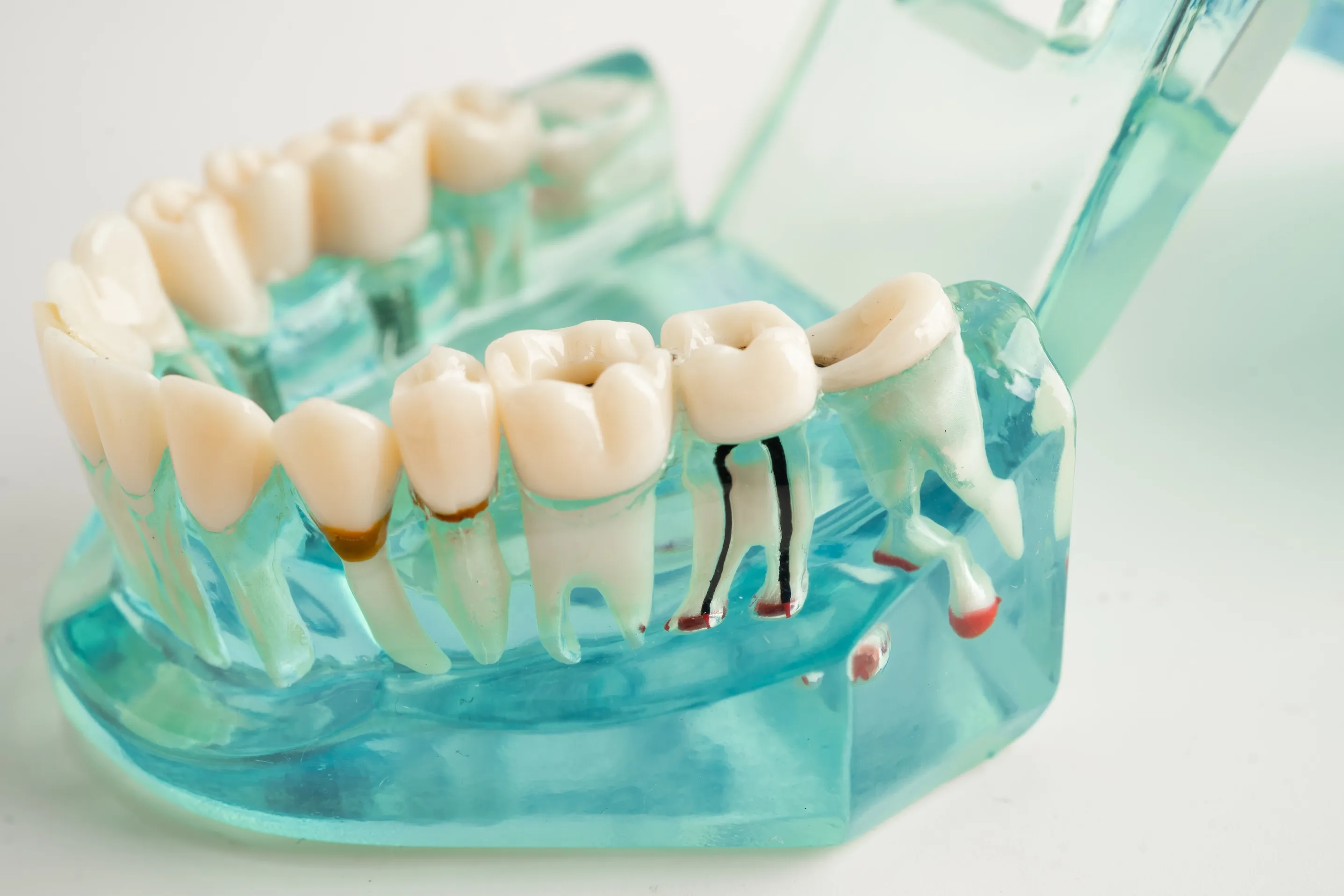
What is Root Canal Treatment?
A root canal is a dental procedure that removes infected or inflamed pulp tissue from inside a tooth. The pulp contains nerves and blood vessels that help the tooth develop during early growth.
When bacteria enter the pulp through deep decay, cracks, or trauma, infection can develop. This infection may cause severe tooth pain and swelling and can spread if left untreated.
During root canal treatment, the dentist:
1. Removes the infected pulp
2. Cleans and disinfects the root canals
3. Fills the canals with a biocompatible material
4. Seals the tooth to prevent future infection
After the root canal is completed, the tooth is typically restored with a dental filling or porcelain crown to strengthen and protect it.
This procedure allows patients to keep their natural tooth while eliminating the infection.
Signs You May Need a Root Canal
Certain symptoms may indicate that the inner pulp of the tooth has become infected or damaged.
Common signs that you may need root canal treatment include:
• Severe or persistent toothache
• Prolonged sensitivity to hot or cold foods
• Pain when biting or chewing
• Swelling or tenderness in the gums
• Darkening or discoloration of the tooth
• A pimple-like bump on the gums near the tooth (abscess)
Sometimes an infected tooth may not cause noticeable pain right away, which is why regular dental exams and X-rays are important for early detection.
If you experience any of these symptoms, it is important to seek dental care promptly to prevent the infection from spreading.
Causes of Tooth Pulp Infection
Several dental conditions can lead to pulp infection that requires root canal treatment.
These may include:
• Deep cavities caused by untreated tooth decay
• Cracked or fractured teeth
• Trauma or injury to the tooth
• Repeated dental procedures on the same tooth
• Advanced gum disease affecting tooth roots
Addressing these problems early can help prevent more serious complications and preserve the natural tooth.
Benefits of Root Canal Treatment
Root canal therapy offers several important advantages for both oral health and overall comfort.
Pain Relief
Removing infected tissue eliminates the source of tooth pain and inflammation.
Save Your Natural Tooth
Root canals allow patients to keep their natural teeth instead of requiring extraction.
Prevent Spread of Infection
Treating the infection helps prevent bacteria from spreading to surrounding teeth, bone, or tissues.
Restore Normal Function
After treatment and restoration, the tooth can function normally for chewing and speaking.
Long-Term Results
With proper oral hygiene and regular dental visits, a root canal-treated tooth can last for many years.
The Root Canal Procedure
At Omnia Modern Dentistry, root canal treatment is performed using modern techniques designed to maximize comfort and precision.
1. Diagnosis and Examination
Dr. Priyawat evaluates the tooth and may take digital X-rays to determine the extent of infection.
2. Local Anesthesia
The area around the tooth is completely numbed to ensure a comfortable experience during treatment.
3. Removal of Infected Pulp
A small opening is made in the tooth to access the pulp chamber, and the infected tissue is carefully removed.
4. Cleaning and Shaping the Canals
The root canals are thoroughly cleaned and shaped to prepare them for filling.
5. Filling the Root Canals
The canals are filled with a special biocompatible material that seals the space and prevents reinfection.
6. Final Restoration
The tooth is sealed with a filling or restored with a dental crown to strengthen and protect it.
Many root canal treatments are completed in one or two appointments, depending on the condition of the tooth.
Recovery After Root Canal Treatment
Most patients return to normal daily activities shortly after their root canal procedure.
You may experience mild sensitivity for a few days as the surrounding tissues heal, but this typically resolves quickly.
To support healing:
• Avoid chewing on the treated tooth until it is fully restored
• Take any prescribed medications as directed
• Maintain good oral hygiene
• Attend follow-up appointments if recommended
Once a crown or filling is placed, the tooth should function normally again.
Root Canal vs Tooth Extraction
When a tooth becomes infected, patients sometimes wonder whether extraction is the better option.
In most cases, saving the natural tooth with a root canal is the preferred treatment.
Keeping your natural tooth helps:
• Maintain proper bite alignment
• Prevent shifting of surrounding teeth
• Preserve jawbone structure
• Avoid the need for replacement options like implants or bridges
Dr. Priyawat carefully evaluates each situation and recommends the most appropriate treatment for your oral health.
Root Canal Treatment at Omnia Modern Dentistry
At Omnia Modern Dentistry, we focus on providing comfortable, effective root canal treatment in Chino Hills, CA using modern dental techniques and patient-centered care.
Dr. Rupporn Priyawat is committed to helping patients relieve pain, eliminate infection, and preserve their natural teeth whenever possible.
If you are experiencing tooth pain or suspect an infection, early treatment can help prevent further complications and restore your oral health.
Schedule a consultation with Omnia Modern Dentistry today to learn more about root canal treatment in Chino Hills and how we can help protect your smile.
.webp)