How a Diode Laser Works
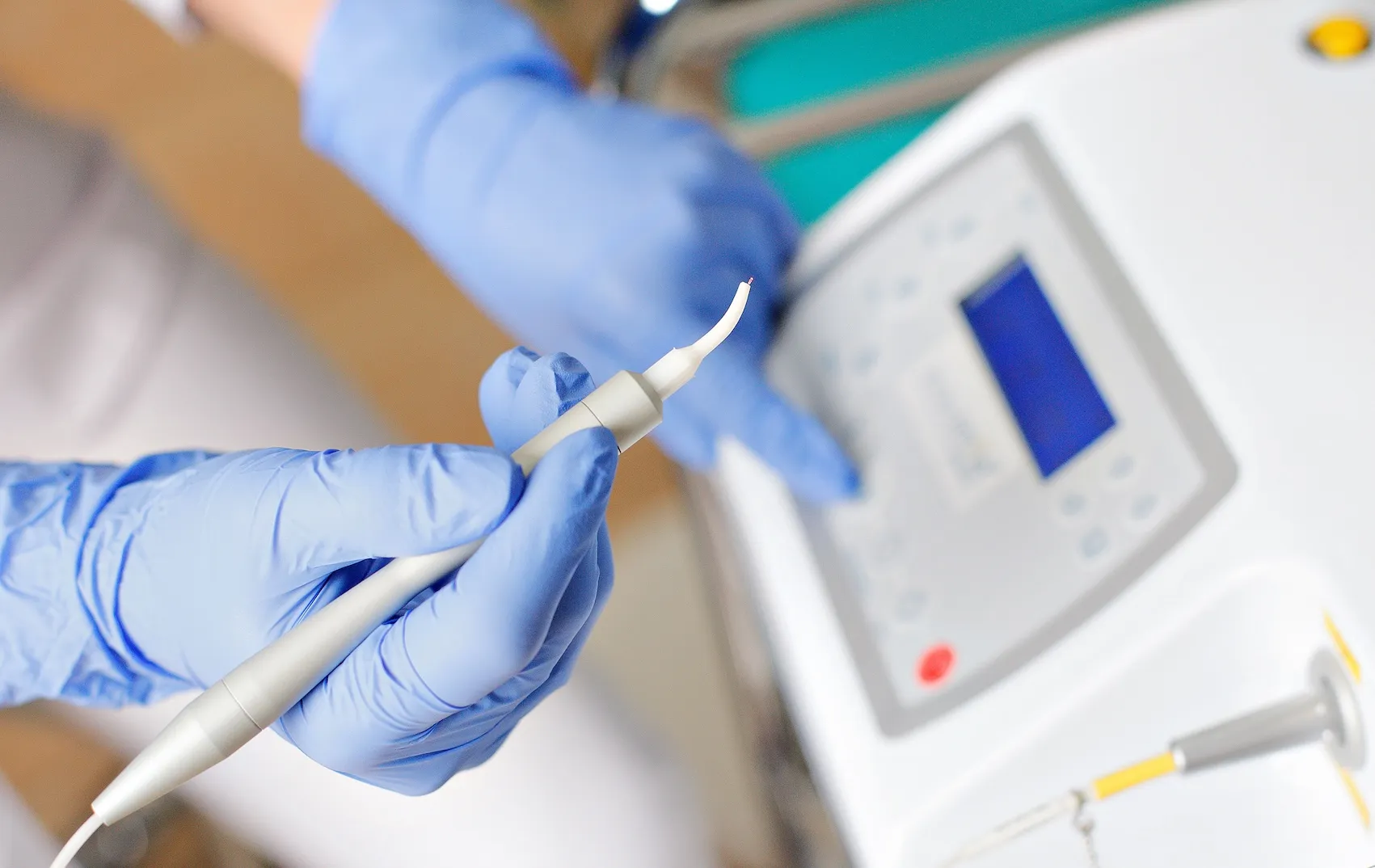
A diode laser delivers concentrated light energy to a defined area of soft tissue. Rather than cutting mechanically, it vaporizes tissue in a controlled way while sealing small blood vessels at the same time.
That combination is what makes it useful:
• Seals small blood vessels as it works, so bleeding is minimal
• Energy is delivered to a defined area, leaving healthy tissue undisturbed
• Many procedures heal without the need for sutures
• Reduced trauma generally means faster, more predictable healing
The result is a treatment field that stays minimal removal of natural tooth structure, allowing dentists to preserve more of the healthy tooth.
clear and dry, so the dentist can see precisely what is being treated.
What We Use the Laser For
The laser is used across a wide range of soft-tissue procedures at our Chino Hills office.
They can correct several cosmetic concerns, including:
• Gingivectomy and gingival contouring to reshape excess or uneven gum tissue
• Frenectomy to release a restrictive band beneath the tongue or upper lip
• Operculectomy to remove the gum flap over a partially erupted tooth
• Soft-tissue excision and biopsy with a controlled margin
• Implant uncovering to expose a healed implant for restoration
• Periodontal pocket decontamination and sulcular debridement
It is also used for troughing around crown and veneer preparations, which opens a precise channel so the margin can be captured accurately in an impression or digital scan. A cleaner, drier field means a better-fitting custom night guard to achieve a dramatic transformation.
Dr. Priyawat will explain which procedure applies to your case and whether the laser is the right tool for it.
Why a Laser Instead of a Scalpel
For soft-tissue work, the laser offers practical advantages over a conventional scalpel.
Natural Appearance
Because bleeding is controlled as the laser works, the treatment area stays visible throughout the procedure.
Long-Lasting Results
Many laser procedures require 10–15 years or longer.
Stain Resistance
Patients frequently report less swelling and soreness afterwards than with conventional soft-tissue surgery.
Minimally Invasive
Healthy tissue next to the treatment site is largely undisturbed.
Faster Healing
Reduced trauma to the tissue generally means a quicker, more predictable recovery.
What to Expect at Your Appointment
Most laser soft-tissue procedures take between two to three appointments.
1. Examination and Planning
Dr. Priyawat examines the area, explains what the laser will be used for, and tells you whether anesthetic will be needed. Some minor soft-tissue work requires only a topical.
2. Tooth Preparation
Protective eyewear is provided to everyone in the room before the laser is switched on.
3. The Procedure
The laser is applied to the treatment area with settings matched to the tissue. Most procedures take ten to thirty minutes.
4. Final Placement
You will usually be able to return to normal activity the same day, with aftercare instructions specific to your procedure.
The result is a treated area that heals cleanly, often without stitches.
Aftercare and Healing
Aftercare is generally straightforward.
Recommended care tips include:
• Avoid disturbing the treated area with your tongue or fingers
• Keep the site clean, brushing gently around it
• Stick to softer foods for the first day or two if the area feels tender
• Rinse as directed, usually with warm salt water
• Contact us if discomfort increases rather than settles
Most sites are comfortable within a few days, with full tissue healing over one to two weeks depending on the size of the area treated.
What a Diode Laser Cannot Do
A diode laser treats soft tissue only. It cannot remove decay, prepare a tooth for a filling or crown, or cut bone. Those procedures still use conventional instruments.
You may be a good candidate if you have:
• Orthodontic soft-tissue exposure so brackets can be bonded
• Treatment of selected oral lesions
• Photobiomodulation to support tissue healing and comfort
• Hemostasis, controlling bleeding during other procedures
We mention this because laser dentistry is sometimes marketed as though a laser replaces the drill. It does not. What it does is make soft-tissue work more precise and more comfortable, and that is where we use it.
Dr. Priyawat will help determine the best cosmetic treatment plan based on your individual needs.
Laser Dentistry at Omnia Modern Dentistry
At Omnia Modern Dentistry, the laser is one tool among many, chosen when it genuinely serves the treatment. Dr. Rupporn Priyawat provides laser dentistry in Chino Hills, CA, designed to deliver natural-looking, long-lasting results.
Every treatment begins with an examination and a clear explanation of what the laser will and will not do.
To find out whether laser treatment is right for your case, schedule a consultation with Omnia Modern Dentistry. Call (909) 497-9449.
.webp)